You’ve tried to-do lists. You’ve downloaded productivity apps. You’ve even attempted the Pomodoro Technique. Yet somehow, you still find yourself pulling all-nighters before deadlines, wondering where all your study time disappeared to. The problem isn’t your work ethic—it’s your approach to time management.

Why Traditional Time Management Fails Students
The typical student’s approach to time management revolves around reactive to-do lists and vague intentions to “study later.” This method fails for several fundamental reasons:
- It doesn’t account for time as a finite resource: To-do lists focus on tasks without acknowledging the limited hours available to complete them.
- It ignores the reality of context switching: Moving between different subjects or projects creates significant cognitive overhead, reducing overall productivity.
- It allows for procrastination: Without specific time commitments, it’s easy to postpone difficult tasks indefinitely.
- It creates decision fatigue: Constantly deciding what to work on next depletes mental energy better used for actual studying.
Time blocking addresses these issues by transforming your schedule from a list of hopes into a concrete plan of action.
What Is Time Blocking and Why It Works for Students
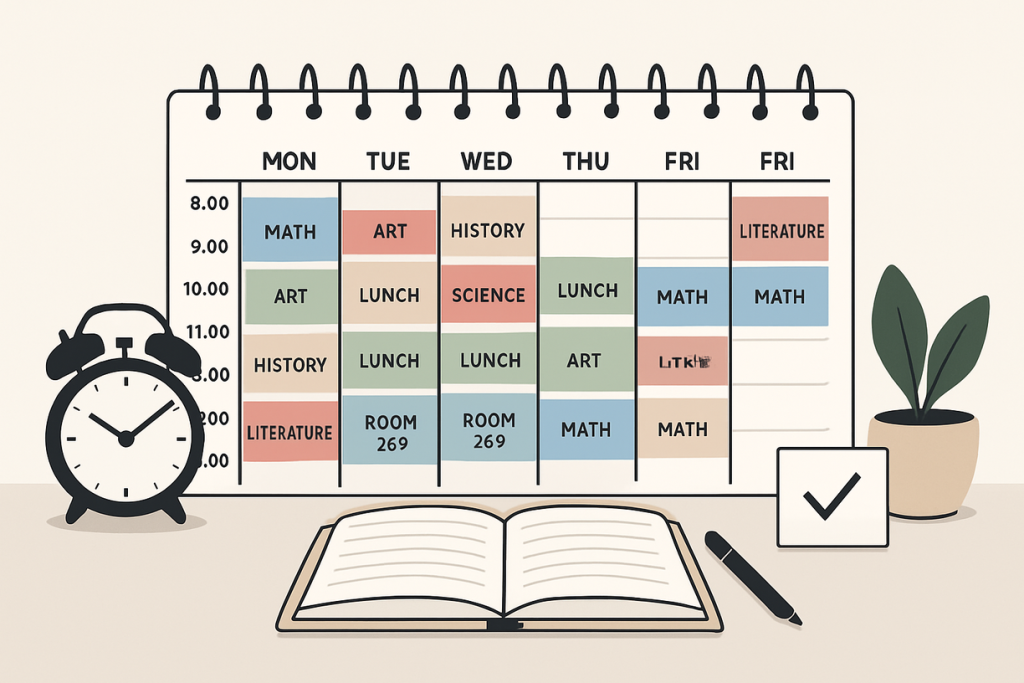
Time blocking is a productivity system where you divide your day into defined periods dedicated to specific tasks or subjects. Rather than working from a to-do list, you work from a calendar where every hour has a predetermined purpose.
This approach is particularly effective for students because:
- It creates realistic expectations: You can only allocate the hours that actually exist, forcing prioritization.
- It reduces decision fatigue: Once your schedule is set, you don’t waste energy deciding what to study next.
- It builds in transitions: Proper time blocking includes breaks and transitions between subjects.
- It accounts for different energy levels: You can schedule demanding subjects during your peak cognitive hours.
- It creates psychological boundaries: When time is specifically allocated, it’s easier to focus on the current task without anxiety about other responsibilities.
Research from the American Psychological Association shows that this structured approach to time management can reduce academic stress while improving performance. One study found that students who used time blocking improved their GPA by an average of 0.5 points compared to control groups using traditional to-do lists.
How to Implement Time Blocking as a Student
Creating an effective time blocking system requires thoughtful planning and consistent execution. Here’s a step-by-step approach:
Step 1: Audit Your Current Time Usage
Before creating your ideal schedule, understand how you’re currently spending your time:
- Track all activities for one typical week, including classes, studying, socializing, sleeping, and downtime.
- Note your energy levels throughout the day to identify your most productive periods.
- Calculate how much time you’re actually spending on academic work versus how much you think you’re spending.
This audit often reveals surprising patterns and helps identify time sinks you weren’t aware of.
Step 2: Identify Your Fixed Commitments
Start building your time blocking schedule with non-negotiable commitments:
- Class times
- Work shifts (if applicable)
- Essential appointments
- Commuting time
- Basic self-care (meals, sleep, hygiene)
These form the framework around which you’ll build your flexible blocks.
Step 3: Determine Your Academic Requirements
Calculate the study time needed for each course:
- The standard recommendation is 2-3 hours of study time per credit hour
- Adjust based on course difficulty and your familiarity with the subject
- Factor in additional time for major assignments and exam preparation
For example, a 15-credit semester might require 30-45 hours of study time weekly, distributed across your courses according to their difficulty and your proficiency.
Step 4: Create Your Ideal Week Template
Design a weekly template that includes:
- Focus blocks: 1-2 hour periods dedicated to deep work on specific subjects
- Buffer blocks: 30-minute periods between activities to account for transitions
- Break blocks: Dedicated time for rest, meals, and recreation
- Admin blocks: Time for emails, planning, and organizational tasks
- Flex blocks: Unscheduled time that can absorb unexpected demands
The template should reflect your natural energy patterns—schedule your most challenging subjects during your peak cognitive hours.
Step 5: Implement Weekly Planning Sessions
Each Sunday, spend 30 minutes adapting your ideal template to the coming week:
- Review upcoming deadlines and adjust study blocks accordingly
- Account for any special events or appointments
- Ensure adequate preparation time for tests and assignments
- Make strategic decisions about what needs to be prioritized or postponed
This weekly planning ritual transforms your ideal template into a practical plan for the specific demands of each week.
Advanced Time Blocking Strategies for Students
Once you’ve mastered the basics, these advanced techniques can further enhance your productivity:
Theme Days
Dedicate entire days to specific subjects or types of tasks:
- Monday for science courses
- Tuesday for humanities
- Wednesday for language studies
This approach minimizes context switching and creates deeper focus.
The 2x Rule
When estimating how long an assignment will take, double your initial estimate. This accounts for:
- Unexpected complications
- Research rabbit holes
- Technical issues
- The tendency to underestimate task duration
This buffer prevents the cascade of missed deadlines that occurs when one assignment runs long.
Energy-Based Blocking
Rather than scheduling by subject, schedule by the type of mental energy required:
- Creative work during your most inspired hours
- Analytical tasks during your most logical periods
- Rote memorization when your energy is lower but focus is still possible
- Administrative tasks during your least productive times
This approach maximizes your natural cognitive rhythms.
The Pomodoro-Block Hybrid
Within larger time blocks, use the Pomodoro Technique to maintain focus:
- Work intensely for 25 minutes
- Take a 5-minute break
- After four cycles, take a longer 15-30 minute break
This creates sustainable intensity within your scheduled blocks.
Common Time Blocking Pitfalls and How to Avoid Them
Even with the best intentions, students often encounter these challenges when implementing time blocking:
Overscheduling
Problem: Filling every minute leaves no room for unexpected events or recovery.
Solution: Build in at least 20% flexible time and adequate breaks between blocks.
Perfectionism
Problem: Abandoning the system after failing to follow it perfectly.
Solution: View your time blocks as experiments rather than commandments. Adjust as you learn what works.
Ignoring Transitions
Problem: Scheduling back-to-back blocks without accounting for the time needed to switch contexts.
Solution: Include 10-15 minute buffer blocks between different activities or subjects.
Resistance to Adaptation
Problem: Sticking rigidly to planned blocks when circumstances change.
Solution: Conduct mid-week reviews to adjust your blocks based on emerging priorities.
Digital Tools to Support Your Time Blocking System
While time blocking can be implemented with a simple paper planner, digital tools offer additional flexibility and features:
- Google Calendar or Apple Calendar: Color-code different types of blocks for visual clarity
- Notion: Create templates that combine scheduling with notes and resources
- Todoist: Integrate task lists with your time blocks
- Forest App: Stay focused during blocks by growing virtual trees that die if you check your phone
Interactive learning platforms like Jotverse can complement your time blocking system by providing adaptive learning with conversational AI tutors that maximize the effectiveness of your dedicated study blocks.
Beyond Productivity: How Time Blocking Improves Learning
Time blocking isn’t just about getting more done—it fundamentally enhances how you learn:
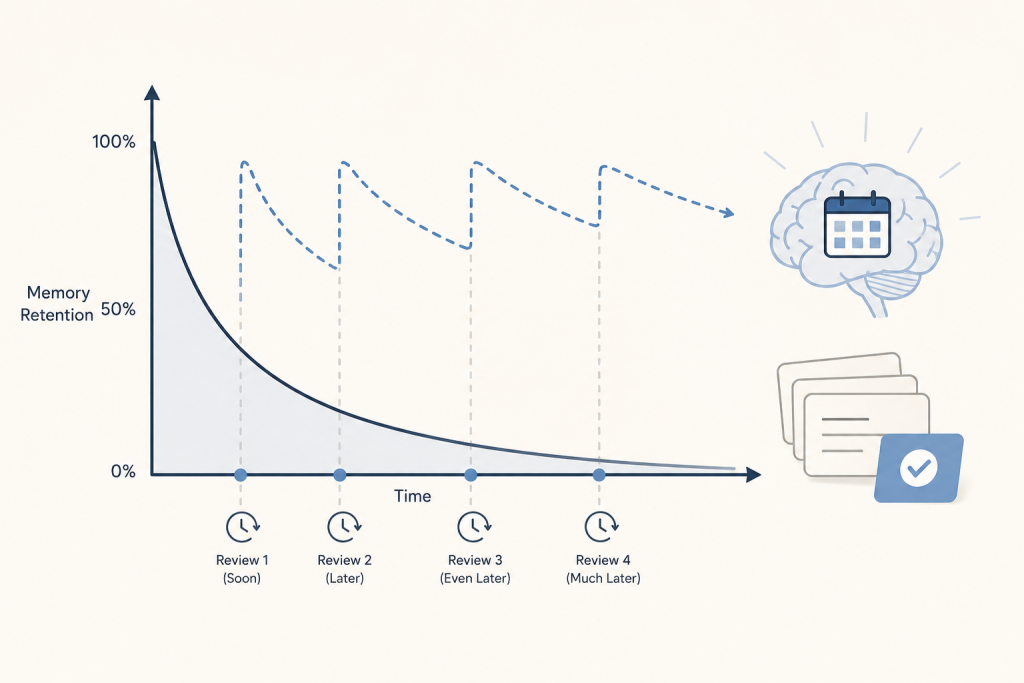
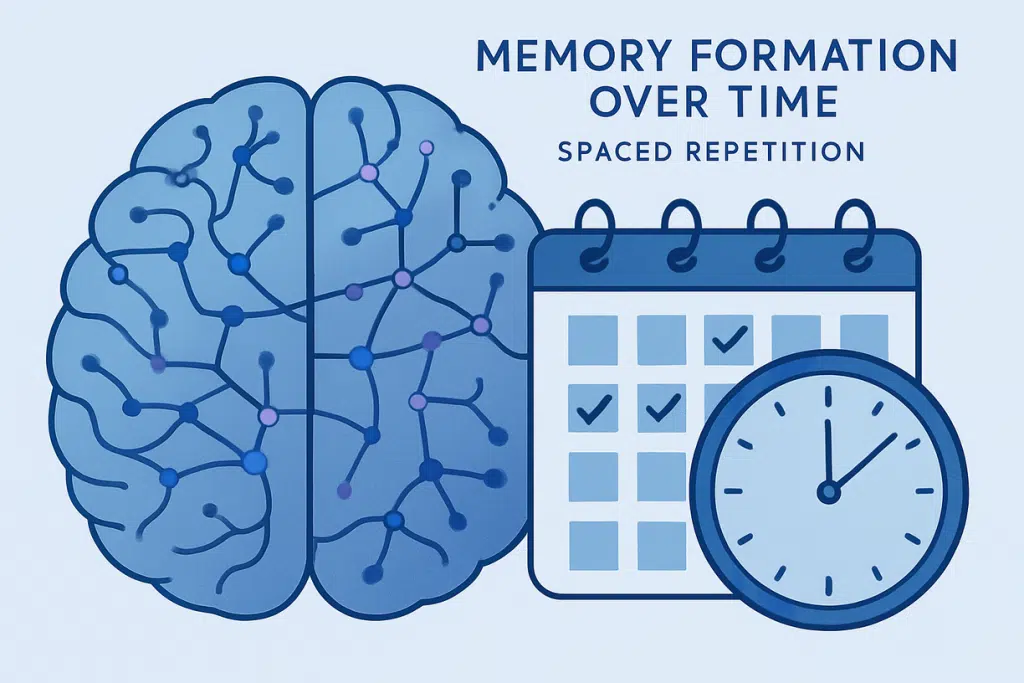
- Spaced repetition: By scheduling regular review sessions across weeks, you leverage the science of memory consolidation.
- Deliberate practice: Dedicated blocks allow for the focused, intentional practice that builds mastery.
- Reduced anxiety: Knowing that everything important has its place in your schedule decreases academic stress.
- Improved metacognition: Regular reflection on your time usage builds awareness of your learning processes.
The structure provided by time blocking creates the conditions for deeper learning and retention, not just task completion.
Getting Started Today
Time blocking represents a significant shift in how you approach your academic responsibilities. Start small:
- Block out tomorrow, just one day, with realistic activities
- Reflect on what worked and what didn’t
- Gradually expand to blocking several days, then a week
- Develop your system through consistent weekly planning sessions
Remember that time blocking is a skill that improves with practice. The initial investment in learning this system pays dividends throughout your academic career and beyond.