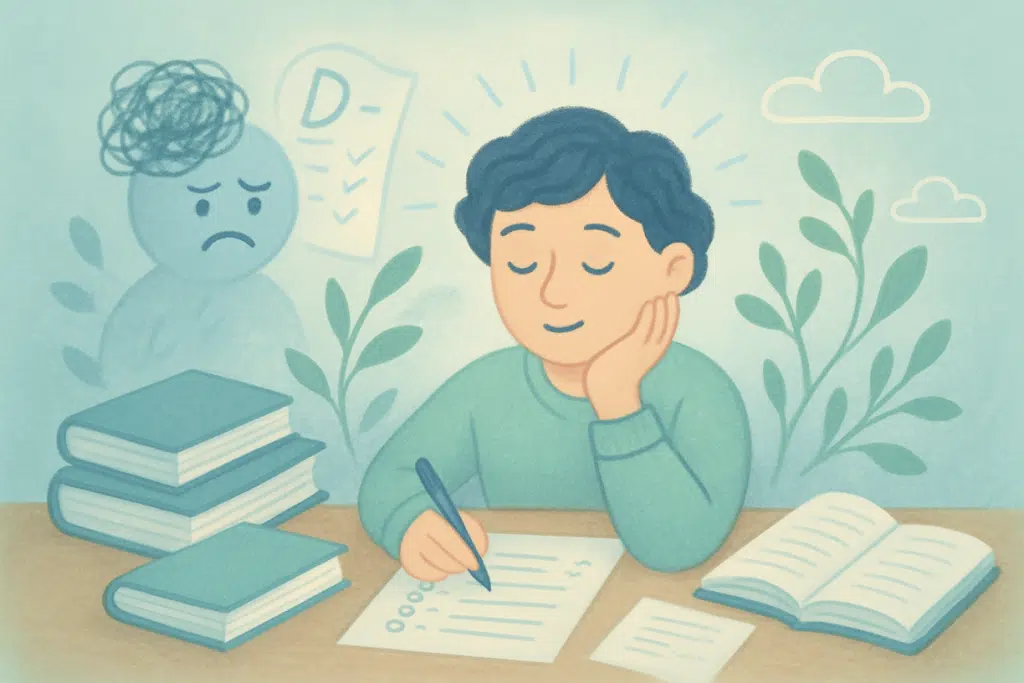
The night before a big exam, your heart races, your mind goes blank, and suddenly all those hours of studying seem useless. If this sounds familiar, you’re not alone. Exam anxiety affects up to 40% of students, with research showing it can lower test scores by as much as 12%. The good news? This is a challenge you can overcome.
Understanding Exam Anxiety
Exam anxiety is more than just feeling nervous. It’s a form of performance anxiety that triggers your body’s fight-or-flight response, flooding your system with stress hormones that can impair cognitive function. This biological response explains why even well-prepared students sometimes “freeze” during exams.
The anxiety cycle typically follows a pattern:
- Anticipatory anxiety builds as the exam approaches
- Physical symptoms intensify (racing heart, sweaty palms, upset stomach)
- Cognitive function decreases (memory recall issues, difficulty concentrating)
- Performance suffers, reinforcing anxiety for future exams
Breaking this cycle requires addressing both the physical and psychological components of anxiety.
Strategy 1: Master the Physiological Response
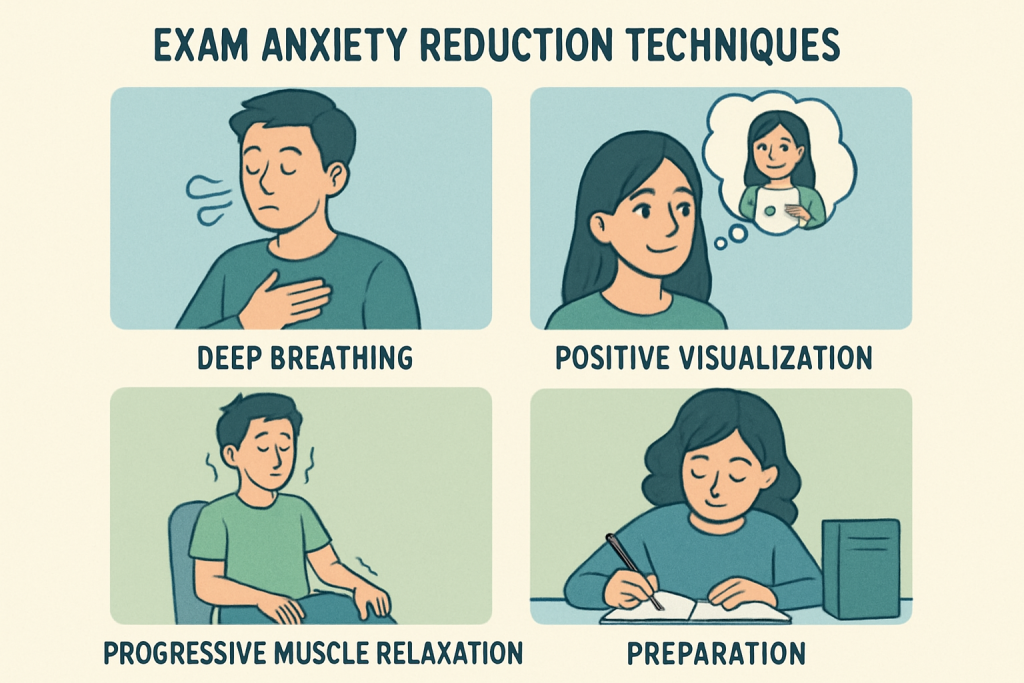
Your body’s physical response to anxiety can be managed through deliberate breathing techniques. When you feel anxiety rising, try this 4-7-8 breathing exercise:
- Inhale quietly through your nose for 4 seconds
- Hold your breath for 7 seconds
- Exhale completely through your mouth for 8 seconds
- Repeat 3-4 times
This technique activates your parasympathetic nervous system, counteracting the fight-or-flight response and lowering heart rate and blood pressure. Practice this daily in the weeks before your exam so it becomes automatic when you need it.
Strategy 2: Reframe Negative Thoughts
Anxiety thrives on catastrophic thinking. Thoughts like “I’ll fail this test” or “I’ll never remember anything” fuel anxiety and become self-fulfilling prophecies. Cognitive reframing interrupts this pattern.
Create a two-column list:
- Left column: Write down your negative thoughts
- Right column: Create a realistic, balanced alternative
For example:
- Negative: “If I don’t ace this exam, my future is ruined.”
- Reframed: “This exam is important, but it’s just one measurement of my knowledge, not a determination of my worth or future.”
Research shows that students who practice cognitive reframing before exams score significantly higher than those who don’t address negative thought patterns.
Strategy 3: Implement Progressive Muscle Relaxation
Physical tension and mental anxiety are deeply connected. Progressive Muscle Relaxation (PMR) breaks this connection by teaching you to identify and release physical tension.
The basic technique:
- Tense a specific muscle group (e.g., your fists)
- Hold the tension for 5-10 seconds
- Release suddenly and completely
- Notice the feeling of relaxation
- Progress through major muscle groups from head to toe
Practice PMR for 15 minutes daily in the weeks before your exam. On exam day, a quick 2-minute version can help reset your nervous system before beginning.
Strategy 4: Visualize Success
Olympic athletes routinely use visualization to improve performance, and research shows it works for academic performance too. Visualization creates neural pathways similar to those formed during actual experience.
Create a detailed mental movie of:
- Entering the exam room feeling confident and prepared
- Calmly reading through the questions
- Knowledge flows easily as you write your answers
- Completing the exam with time to spare
- Receiving your successful results
The key is making your visualization detailed and multi-sensory. What do you see, hear, and feel in this successful scenario? Practice this visualization daily for 5-10 minutes.
Strategy 5: Develop a Strategic Study Plan
Anxiety often stems from feeling unprepared or overwhelmed. A structured study plan addresses both issues:
- Break content into manageable chunks
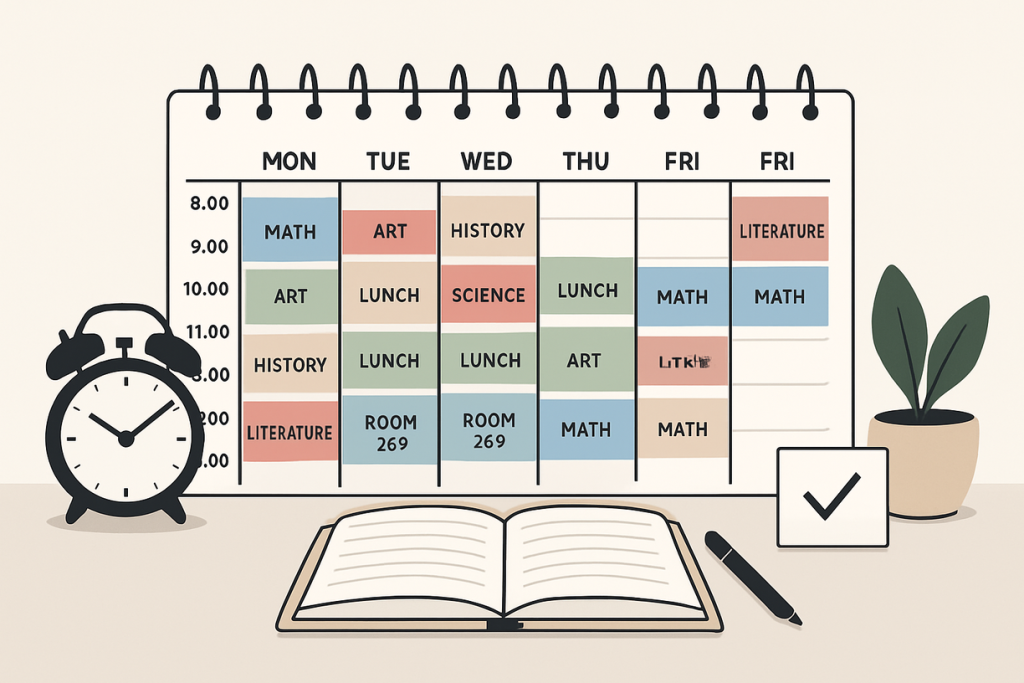
- Create a realistic study schedule with specific goals for each session
- Incorporate active recall techniques rather than passive review
- Schedule regular breaks (the Pomodoro Technique of 25 minutes studying followed by a 5-minute break works well)
- Include practice tests under exam-like conditions
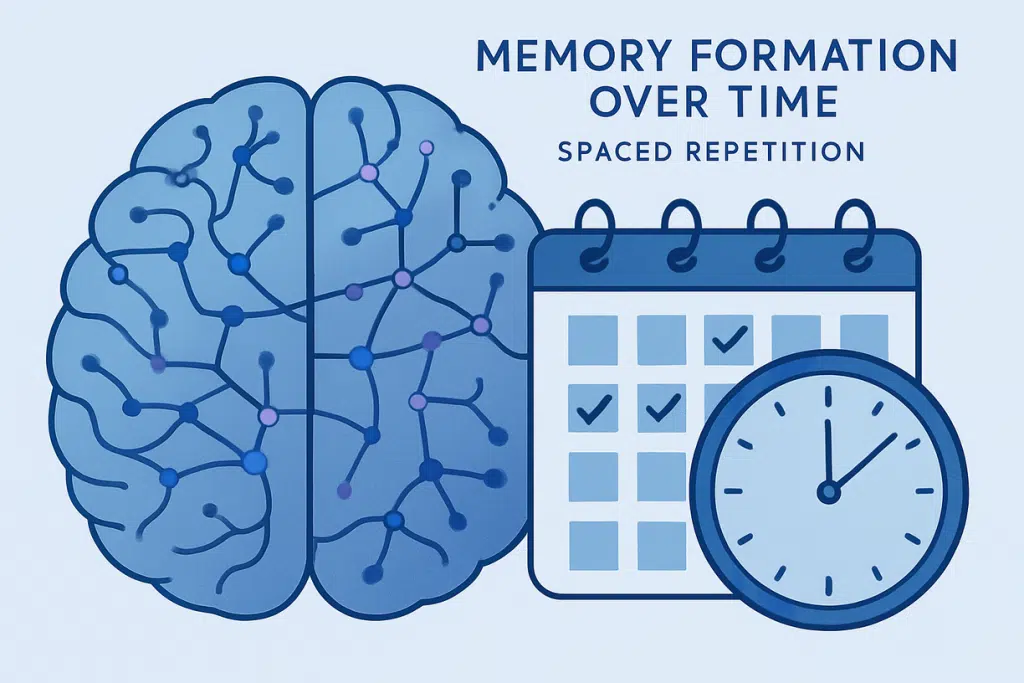
Research shows that distributed practice (studying in shorter sessions over time) is far more effective than cramming. Start your preparation early to reduce last-minute pressure.
Strategy 6: Create Pre-Exam Rituals
Athletes and performers use pre-performance rituals to center themselves and enter the optimal state of mind. Develop your own pre-exam ritual to signal to your brain that it’s time to perform:
- Prepare all materials the night before
- Eat a balanced meal with protein and complex carbohydrates
- Arrive early to avoid rushing
- Listen to calming or motivating music (depending on what works for you)
- Perform your breathing exercise
- Review your positive affirmations
The consistency of a ritual helps reduce uncertainty, which is a major anxiety trigger.
Strategy 7: Use Technology Wisely
While excessive screen time can increase anxiety, certain digital tools can help manage exam stress effectively. Consider using:
- Meditation apps with guided anxiety-reduction exercises
- Study tools that use spaced repetition to optimize learning
- Digital flashcards for active recall practice
- Focus apps that block distractions during study sessions
Interactive learning platforms like Jotverse can help you organize study materials and practice active recall through personalized quizzing, making preparation more efficient and reducing anxiety about being unprepared.
The Path Forward
Exam anxiety doesn’t disappear overnight, but with consistent practice of these strategies, you’ll develop resilience that extends beyond test-taking. Many students report that the skills they develop to manage exam anxiety become valuable tools for handling other stressful situations throughout their academic and professional lives.
Remember that occasional anxiety is normal and can even enhance performance in the right amount. The goal isn’t to eliminate all nervous energy but to channel it productively while preventing debilitating anxiety from interfering with your true abilities.
With practice and persistence, you can transform exam anxiety from an obstacle into an opportunity to demonstrate your knowledge with confidence.