Have you ever crammed for an exam, felt confident walking out of the test, only to realize a week later that you’ve forgotten almost everything? You’re not alone. The traditional approach of intensive, last-minute studying might help you pass a test, but it’s terrible for long-term retention. There’s a better way: spaced repetition.
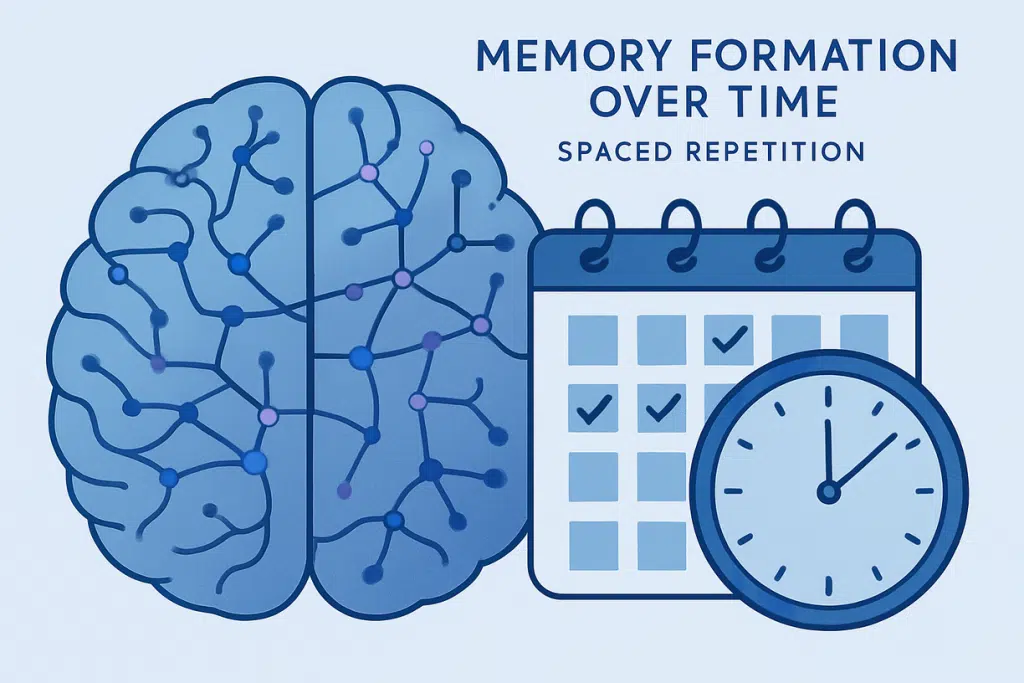
Spaced repetition is a learning technique that involves reviewing information at increasing intervals over time. Instead of cramming everything into one marathon session, you spread your study sessions out, revisiting material just as you’re about to forget it. This method leverages how your brain naturally forms and strengthens memories, leading to dramatically better long-term retention with less overall effort.
The Science Behind Spaced Repetition
The effectiveness of spaced repetition is rooted in well-established psychological principles:
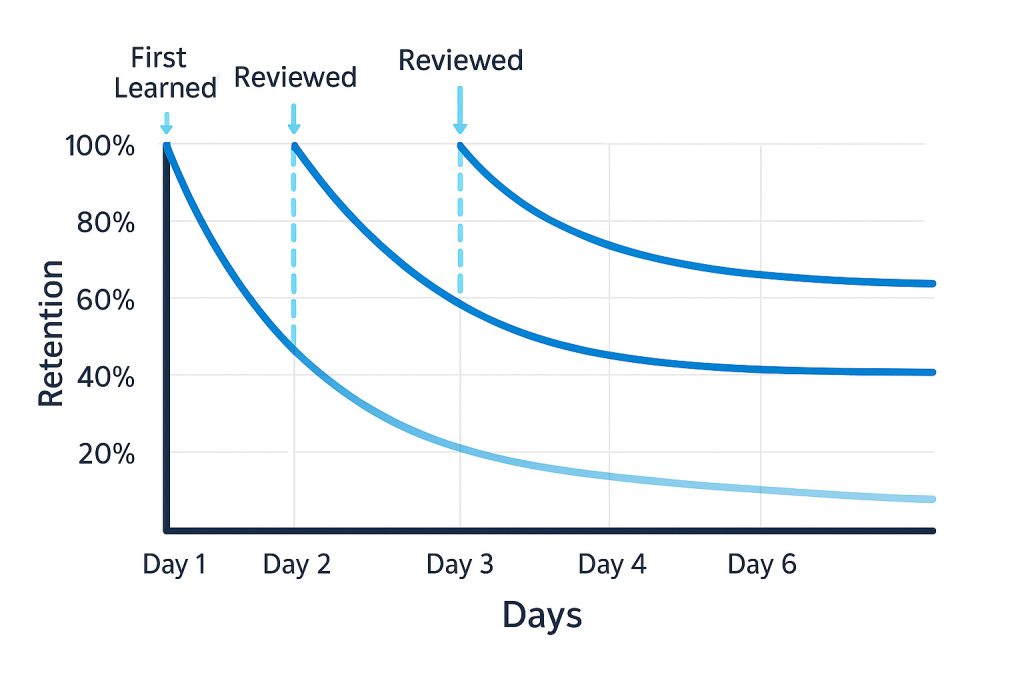
Forgetting Curve: Hermann Ebbinghaus discovered that we forget information exponentially over time. Without reinforcement, we lose about 50% of new information within an hour and up to 90% within a week.
Spacing Effect: The same Ebbinghaus found that information is better retained when learning sessions are spaced out over time rather than massed together. This counterintuitive finding has been replicated countless times across different subjects and age groups.
Desirable Difficulties: Psychologist Robert Bjork showed that making learning slightly more challenging (like waiting until information is partially forgotten before reviewing it) actually strengthens memory formation. The effort required to recall information that’s on the verge of being forgotten creates stronger neural pathways.
When you use spaced repetition, you’re essentially training your brain to move information from short-term to long-term memory more effectively. Each time you successfully recall information that you were about to forget, you strengthen the memory trace and extend the time before you forget it again.
How to Implement Spaced Repetition
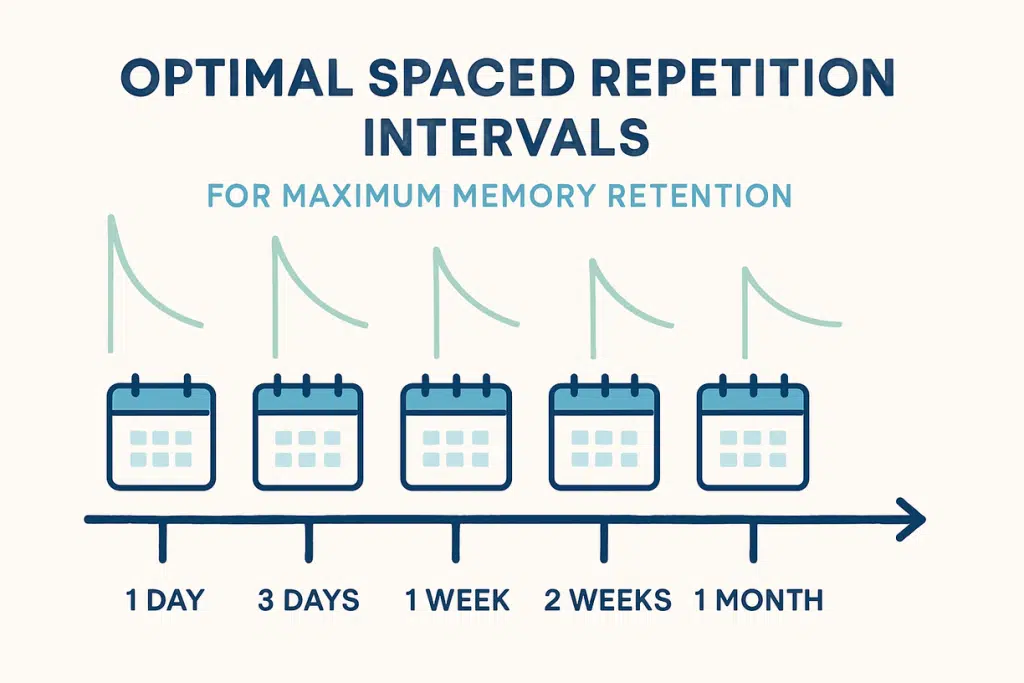
- Start with Short Intervals: Review new material after 1 day, then 3 days, then 1 week.
- Gradually Increase Spacing: As you successfully recall information, extend the intervals (2 weeks, 1 month, 3 months).
- Adjust Based on Difficulty: If you struggle to recall something, shorten the interval. If it’s easy, you can extend it.
- Use Active Recall: Don’t just reread notes. Test yourself by trying to recall information without looking.
- Be Consistent: Regular, shorter sessions are more effective than sporadic, longer ones.
Tools like Jotverse can help automate this process by tracking your learning progress and optimizing review schedules based on your performance. Get started with personalized spaced repetition.
Making Spaced Repetition Work for You
- Create a Study Schedule: Plan your review sessions in advance and stick to them.
- Use Multiple Formats: Mix flashcards, practice problems, and concept explanations.
- Focus on Understanding: Don’t just memorize; make sure you understand the underlying concepts.
- Track Your Progress: Keep notes on what you’re struggling with and adjust accordingly.
The beauty of spaced repetition lies in its efficiency. You spend less time studying overall while achieving better results. Instead of the stress and poor retention that comes with cramming, you build genuine understanding that lasts.
Transform your learning approach today. Your future self will thank you for the knowledge that actually sticks.