If you’re trying to catch up when you’re behind in a difficult college course, the first goal is not to reread everything. Falling behind in a hard course has a particular kind of panic to it.
You open the lecture slides, see six unread chapters, remember the problem set you still do not understand, and decide the only reasonable response is to work through everything in order. Then an hour passes. You have highlighted a few pages, made almost no decisions, and feel even further behind.
That reaction is understandable. It is also usually the trap.
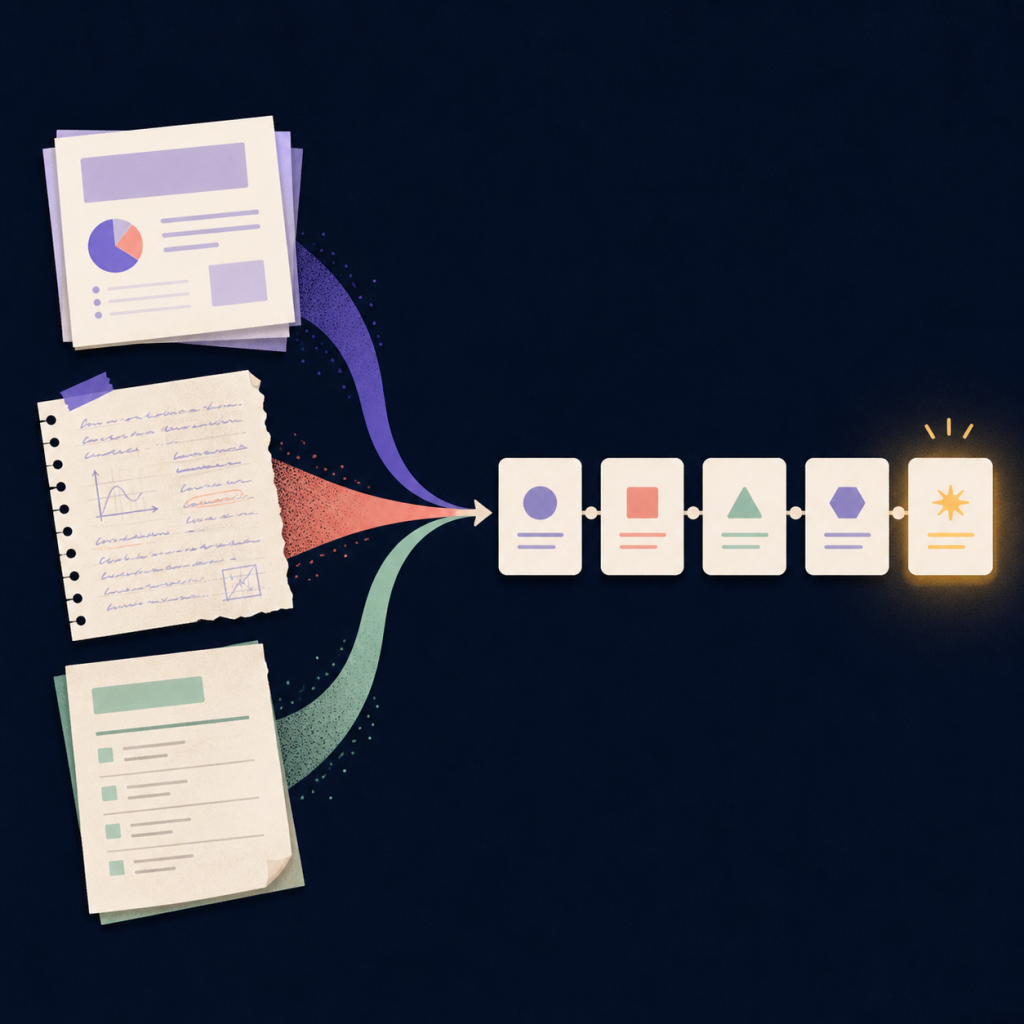
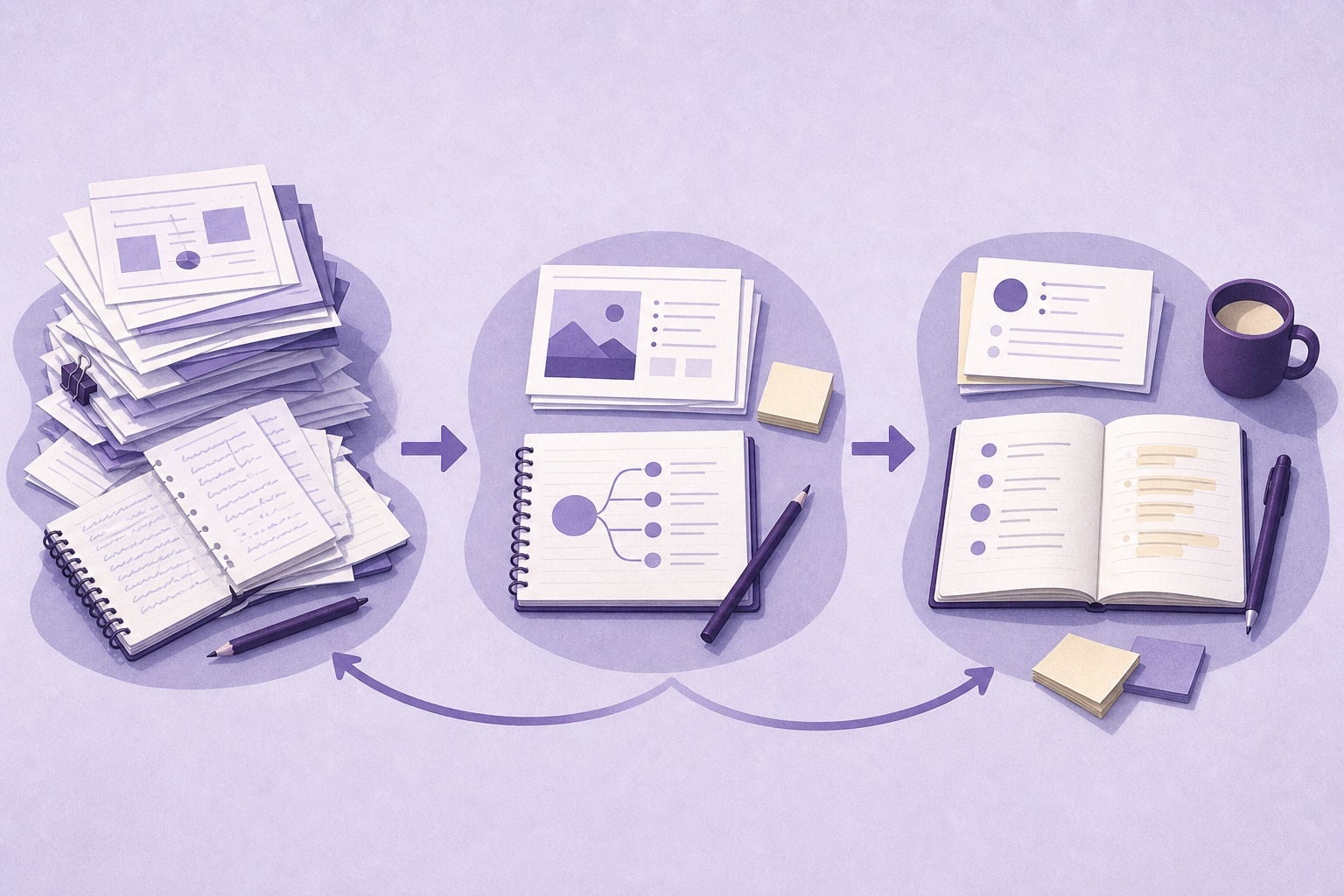
When time is limited, catching up is not about recreating every study session you missed. It is about finding the smallest set of ideas that makes the next part of the course understandable again.
This guide gives you a practical way to do that without pretending you can turn a difficult course into an easy one overnight.
First: stop treating the whole course as one task
“Catch up on chemistry” is not a task. “Catch up on three weeks of calculus” is not a task either.
They are containers for many different jobs:
- figuring out what the next assessment actually covers;
- identifying which concepts are prerequisites and which are detail;
- learning the core idea well enough to use it;
- practising the kinds of questions you will face; and
- deciding what can wait.
If all of those jobs stay mixed together, every study session begins with planning from scratch. That is exhausting, especially when you already feel behind. If the work itself is taking longer than it should, these ways to save time while studying without cutting the learning short can help once you know what deserves your attention.
Your first goal is not to finish a pile of materials. It is to make the next study decision obvious.
1. Make a one-page course map before you start rereading
Give yourself 20 minutes. Open the syllabus, your most recent lecture slides, the next assignment or exam guide, and any course announcements. On one page, write four short lists:
- What is next? The next exam, quiz, assignment, lab, or class topic.
- What does it cover? Name the chapters, units, or concepts—not every page.
- What feels missing? Write the ideas you cannot yet explain or apply.
- What evidence do I have? Include missed questions, problem sets, lecture examples, or feedback.
Do not try to make this map beautiful. It is a triage tool.
For example, an organic chemistry student might write:
Next: substitution and elimination quiz on Friday.
Covers: leaving groups, nucleophiles, SN1/SN2, E1/E2.
Missing: I can recognise the words but cannot choose a mechanism.
Evidence: missed mechanism questions in last problem set; lecture 7 examples made no sense.
That is already much more useful than “I need to catch up on organic chemistry.”
2. Find the missing prerequisite, not just the missing lecture
Course materials are often presented in the order they were taught. That is not always the order you need to rebuild understanding.
If a later topic is confusing, ask: What would I need to understand before this made sense?
In difficult courses, one missing prerequisite can make several later lectures look impossible:
- In calculus, trouble with integration may actually begin with algebra manipulation or derivatives.
- In physics, a mechanics problem may be blocked by free-body diagrams, not the final formula.
- In anatomy, a new system can feel like a list of facts if the basic structure and vocabulary are still fuzzy.
- In programming, a confusing assignment may require one small earlier concept—such as loops, functions, or data types—to click first.
This is where “read every missed slide” is inefficient. Start with the earliest concept that unlocks the most of what comes next.
If you are not sure what that is, use a professor’s learning objectives, worked examples, or the questions you got wrong. They usually reveal the dependency faster than your notes do.
3. Build the next two sessions, not a fantasy schedule
When you are stressed, it is tempting to make a heroic seven-day timetable that assumes perfect focus, no other classes, and no life happening around you.
Instead, plan only the next two sessions. Each session should have one learning target and one way to check whether it worked.
Here is a strong recovery-session structure:
| Part | Time | What to do |
|---|---|---|
| Orient | 10 minutes | Review the exact topic, assessment requirement, and one worked example. |
| Learn | 25–40 minutes | Rebuild one prerequisite or one core concept using notes, a lecture, or a textbook. |
| Retrieve | 10–15 minutes | Close the notes and solve, explain, label, or sketch from memory. |
| Decide | 5 minutes | Record what you could not do and choose the next smallest topic. |
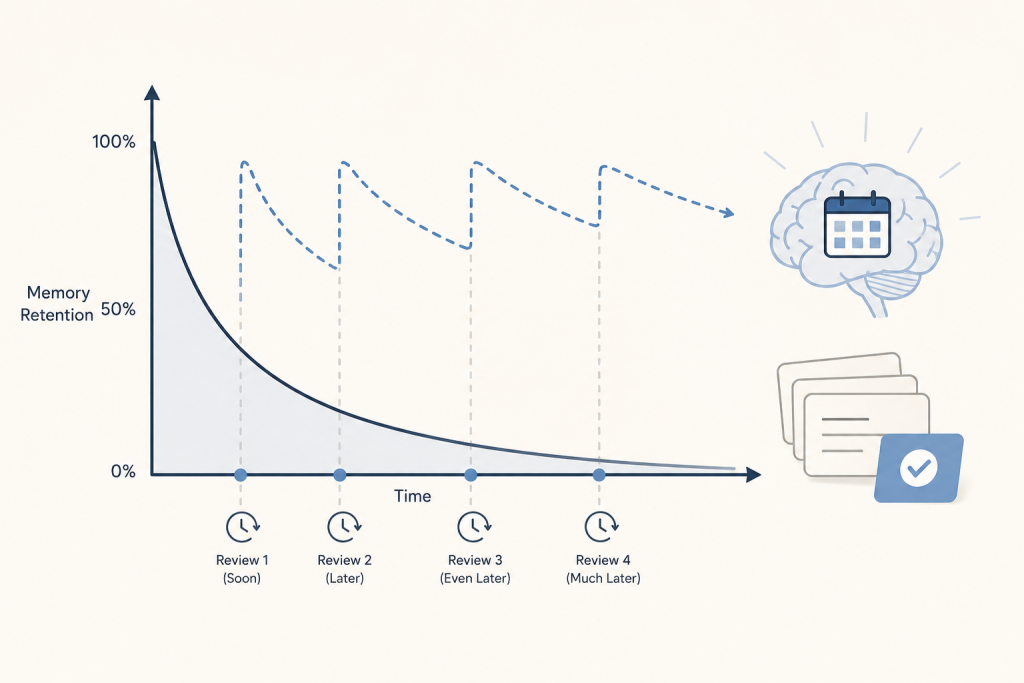
The retrieval step matters. Recognition can feel like understanding, but it is not the same as being able to use an idea. Practice testing and spaced review are consistently among the most useful study techniques, especially when they show you what still needs work.
You do not need a perfect plan. You need a plan that produces evidence: Can I solve this? Can I explain this? Can I tell similar problems apart?
4. Use questions to decide what deserves more time
Do not measure a catch-up session by how many pages you touched.
Measure it by what you can now do without looking.
After each topic, try one of these checks:
- explain the concept in three sentences without your notes;
- solve one representative problem from a blank page;
- compare two similar ideas and name the important difference;
- draw the process, structure, or relationship from memory; or
- write the question you would ask on an exam, then answer it.
If the answer is incomplete, that is useful information—not a reason to restart the whole course. It tells you where the next session belongs.
This is also why rereading alone is rarely enough when you are behind. Rereading can help you orient yourself, but it does not reliably tell you whether you could use the information under pressure. If a concept “makes sense” when you see it but disappears when you have to explain it, you may find this distinction between comprehension and real understanding useful.
5. Be selective about what you recover
There are three kinds of material in a catch-up plan:
Recover now
Prioritise anything that is:
- directly assessed soon;
- required to understand the next topic;
- repeatedly used in assignments or lectures; or
- the reason you keep getting questions wrong.
Recover later
Keep a short list for material that matters but is not blocking the next assessment yet. This stops you from forgetting it without letting it take over today’s session.
Do not recover by yourself first
If a concept is still opaque after one focused attempt, do not spend three more hours circling it alone. Bring a specific question to office hours, a teaching assistant, a classmate, or a tutor. If the frustration is starting to drain your momentum, read this practical guide to reigniting study motivation when everything feels overwhelming before you decide the course is impossible:
“I can follow the worked SN1 examples, but I cannot tell when a problem is testing SN1 versus E1. Can we compare one of each?”
That is a much easier question for someone to help with than “I do not understand chapter 6.”
6. Do not turn an exam next week into a memory project
When the deadline is close, you still need understanding—but your strategy changes.
You are aiming for useful coverage and targeted practice, not a perfect set of notes.
For an exam in the next week:
- list the examinable topics;
- mark each one as can do, partly can do, or cannot do yet;
- spend most of your time on high-frequency, high-impact gaps;
- mix practice from more than one topic once the basics are back; and
- revisit the errors you make, not only the topics you enjoy.
This is a good moment to use shorter, repeated checks instead of one marathon review. Our guide to the spacing effect explains why returning to material is more useful than trusting one long, familiar-feeling session.
A practical way to use an AI tutor while you catch up
An AI tool is most useful here when it reduces planning overhead and makes you think—not when it replaces the thinking.
With Jotverse, you can add the slides, notes, readings, and syllabus for the course you are actually trying to recover. The tutor can keep the conversation connected instead of making you restart the plan every time you open a chat. Then use it to:
- identify a sensible topic order from your own material;
- explain the prerequisite behind the part that is blocking you;
- quiz you on the concept before you move on;
- turn a lecture section into a comparison table, mind map, or practice set; and
- keep track of the questions or concepts you need to revisit.
Try this starting prompt after uploading your material:
“I am behind for an exam on Friday. Based on these materials, help me identify the three concepts I need first. Ask me a few questions before making the plan, and keep the first session under 45 minutes.”
That gives you a starting point, but you are still the person doing the learning. The goal is not to get a perfect summary. It is to leave each session knowing what you can do, what you cannot do yet, and what comes next.
Create a tutor from your course material and turn the next study session into a clear next step.
Frequently asked questions
Can I catch up in a college course in one week?
Sometimes you can recover enough to perform much better next week, especially when you focus on prerequisites, the next assessment, and representative practice. You probably cannot recreate every missed class in perfect detail. Aim for the ideas that unlock the most of the course first.
Should I read all my notes before starting practice problems?
Usually no. Review enough to orient yourself, then use a small practice question or recall check to discover the real gap. Let the result decide what you read next.
What if I do not know where to start?
Start with the next deadline, the course learning objectives, and one recent assignment or quiz. Those give you evidence about what matters and what is missing. If the materials still feel like a pile, ask a tutor, teaching assistant, or instructor to help identify the first prerequisite.
Is it better to study one topic until I master it?
Early in a recovery plan, focusing on one prerequisite can be useful. Once the basics return, mix representative questions so you practise deciding which method or concept applies. Exams rarely announce the answer path for you.
Sources
- Dunlosky, J. et al. (2013). Improving Students’ Learning With Effective Learning Techniques. Psychological Science in the Public Interest.